
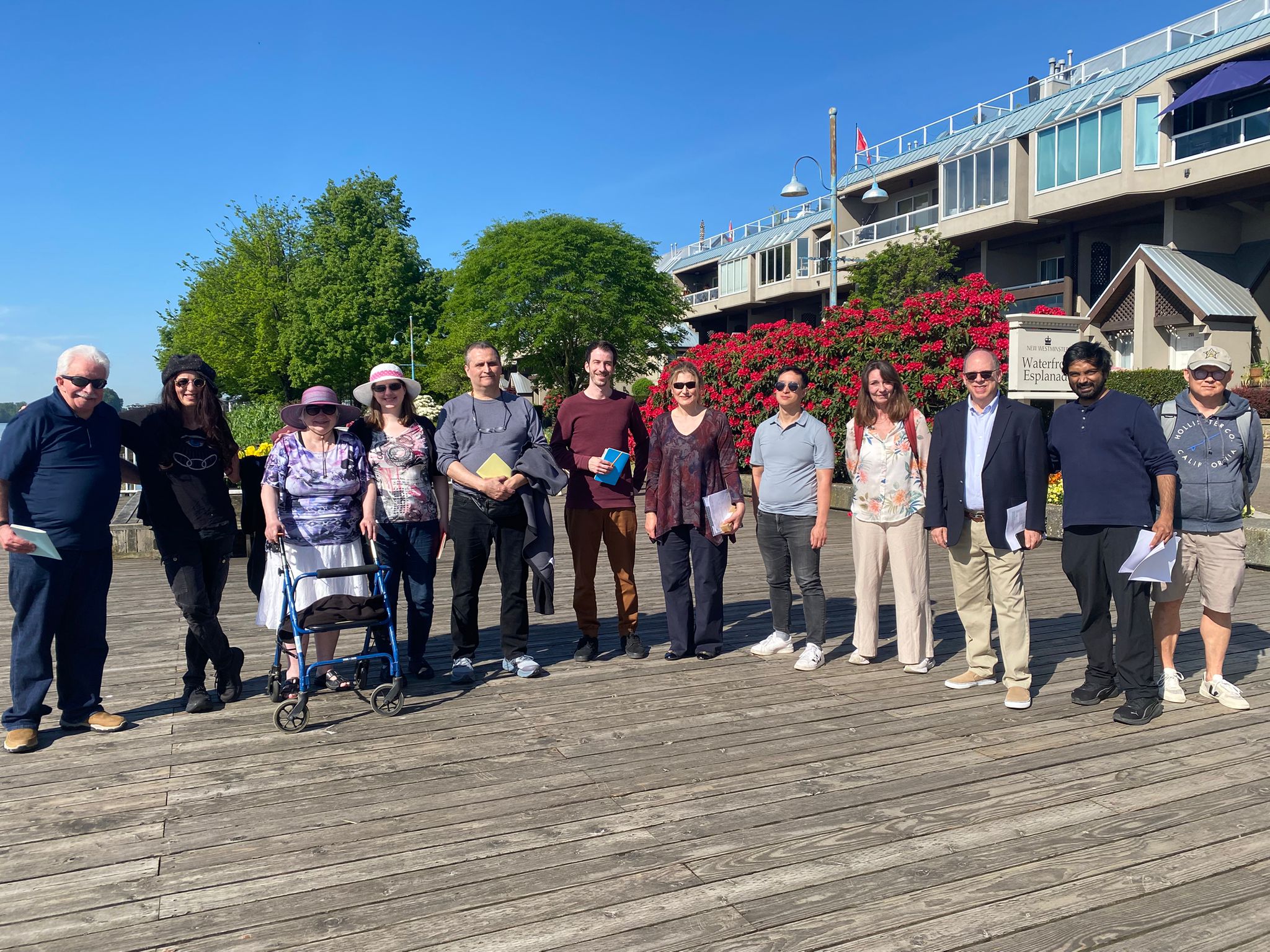
On May 2 and 3, a small group of 21 business professionals gathered at the Inn at the Quay for something unusual.
Not another strategy session.
Not another networking event.
A two-day immersion into a skill most leaders rely on—but few have ever been formally taught:
Intuition.
This marked the first-ever seminar delivery of Developing Your Skill of Intuition, a program designed by Creating Futures That Work, a New York–based leadership firm known for working with senior leaders and complex organizations.
But what unfolded over those two days wasn’t what most people would expect.
There were no endless slides. No recycled frameworks.
Instead, participants were taken through a series of carefully designed experiences—discussion, guided exercises, sketching, painting, movement, breathing, and focused reflection. At first glance, it looked more like an artist’s studio than a business seminar.
That was intentional.
Because the premise behind the program is simple—but powerful:
Intuition is pattern recognition.
And most people, despite their experience, are not trained to see patterns clearly.
They’re overloaded with information. Distracted by noise. Conditioned to analyze—but not necessarily to perceive.
This program flipped that.
Participants learned to slow their observations, filter out internal and external noise, and begin to recognize the subtle signals that shape outcomes in business, relationships, and decision-making. Weak signals. Early indicators. The things that don’t show up in reports—but quietly determine what happens next.
As the sessions progressed, something shifted.
Conversations deepened. Awareness sharpened. Decisions—hypothetical and real—became clearer, faster, and more grounded.
By the end of the weekend, there was a consistent theme among participants:
They didn’t just learn something new. They started seeing things differently.
And that’s where the real value lies.
Because in business, the advantage rarely goes to the person with the most information.
It goes to the person who can interpret it sooner.
The one who notices patterns early.
The one who senses risk before it becomes obvious.
The one who recognizes opportunity while others are still analyzing it.
This is not about intuition as a vague “gut feeling.”
It’s about developing a practical, trainable capability—one that sharpens perception, improves judgment, and helps leaders operate more effectively in complex environments.
The inaugural group of 21 walked away with more than expected—and perhaps more importantly, with a new lens through which to view their world.
The question now isn’t whether intuition matters.
It’s whether more leaders will take the time to develop it—before they need it.


